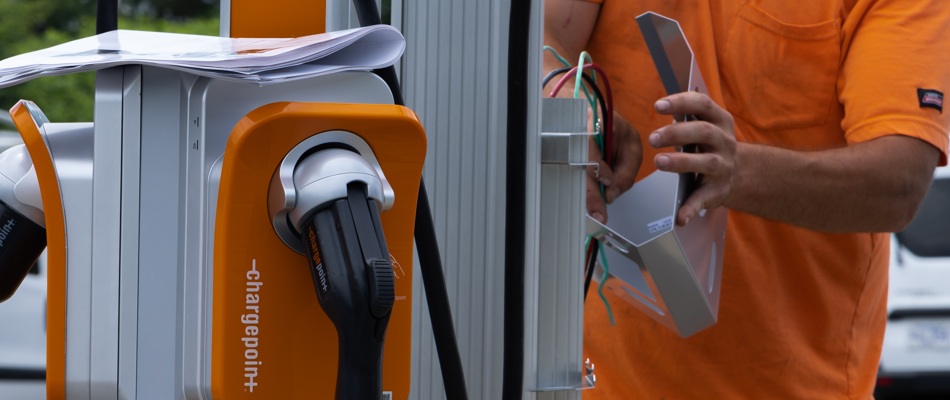

EV Charging Installation for New England Commercial Buildings
Electric vehicle (EV) adoption is accelerating across New England, prompting commercial property owners and organizations to invest in EV charging infrastructure. When properly planned, EV charging can enhance property value, attract tenants and employees, support fleet electrification, and position facilities for future transportation needs.
Why New England Businesses Are Installing EV Charging
As EV adoption increases across New England, commercial properties are adding charging stations to:
- Attract and retain tenants and employees
- Future-proof properties as EV adoption grows
- Support corporate and municipal fleet electrification
- Enhance sustainability and ESG initiatives
Installing EV charging infrastructure is quickly becoming a strategic investment that strengthens property value, competitiveness, and long-term operational readiness.
What Incentives Are Available for EV Charging Stations?
New England businesses may qualify for several EV charging subsidies:
- Utility “make-ready” incentives covering electrical infrastructure
- State electrification initiatives and programs
- Infrastructure support programs
- Demand management participation
Some incentive programs support both Level 2 chargers (ideal for longer dwell times) and DC fast charging installations (designed for rapid, high-power charging).
How Much Does Commercial EV Charging Installation Cost?
Installation costs for EV charging stations vary widely depending on:
- Distance from electrical service
- Site work requirements
- Number of chargers
- Power level
- Utilities upgrades
These factors can significantly impact total project costs, making a detailed site assessment essential for accurate budgeting and planning.
Planning Considerations
Proper planning ensures that a new EV charging infrastructure aligns with your facility’s electrical capacity, operational needs, and long-term energy strategy. Important considerations include:
- Existing electrical service capacity
- Transformer and switchgear limitations
- Parking layout and user access
- Incentive application timelines
Integrating EV charging into a broader energy management strategy improves operational performance and aligns incentives.
Key Takeaways
- EV charging adds strategic property value
- Incentives significantly reduce installation costs
- Electrical service planning is critical
- Integration improves long-term ROI
For property owners and facility managers considering EV charging, early planning ensures infrastructure aligns with long-term operational and energy goals.